

Let us begin with a disclaimer: I am about as anti- a club soul as one could be. I’m highly allergic; break out in blotchy hives. I have never been one for entities with borders: you’re in, I’m out. Yuck. Ever since I sucked myself into that ancient Book-of-the-Month Club and found tomes teetering in stacks all over my long-ago apartment, I’ve barred the doors on clubs. I don’t want to show up regularly; I don’t want to read the prescribed books; and I certainly don’t want to be held to pre-defined expectations.
My definition of a “club” is a far bit looser. It’s something of an ideation as vaguely formed as a wisp of cirrus cloud: It hovers, wafts above, seems to have little form whatsoever. It’s but a brush stroke in the sky. And yet, it still qualifies at least in the eye of the beholder as something of a held-together blob of celestial condensations.
For the purposes of the club in question let’s define the term as little more than an organizing principle, an overarching cloak that provides pursuit. Solitary pursuit, all the better.
Well now. Now that that’s behind us, let’s get on with the notion here. Perhaps you, like me, woke up this week feeling something of a leaden anvil pressing down upon your chest. You’d read, the night before, of all this AI hullabaloo, the rampant fear that we’re going down in a fevered brew that shall make the bubonic plague seem paltry. Or we’ll wake up some day to find the lights—and the fridge, and the gas pumps, and the grocery stores—have all gone dark. Forever dark. We’ll be left to forage for dandelions in the asphalt cracks
Or, let’s say it’s the madness pouring forth from the White House that’s got us tied in suffocating knots. The almost certain fear that the driver of this bus is driving us—if not already has—off a vertiginous mountain road, and we are praying (and I mean praying) a rescue squad shows up to pluck remnants from the ruins.
Maybe you merely felt that autumnal itch in the air, the one that has us burrowing into nubby woolens, throwing extra blankets atop the bed, and sifting through the produce bins for hard-shelled gourds, those crops that know the chilly nights out in the fields call for overcoats of sturdy and impenetrable gird.
And maybe, just maybe, a vat of soup might save you.
Picture this: You are stationed there before your butcher’s block; you wield a knife and a vengeance. You’ve an array before you of alliums and bunches from the garden’s bounty. You have at it: smashing garlic cloves to bits, slicing onions into crescent moons, chopping carrots into zaftig coins. You pour olive oil with abandon into a big fat pot certain to break too many toes. Don’t forget to inhale the sizzling song as heat meets olive’s essence. You stir, you wait, you stir some more. Then you dump in the star attraction: whatever is the earthy ware that defines the potage in the making, be it carrot, butternut, or broccoli. Once a golden edge appears, it’s time to bathe it all in broth. Then pop on the lid and let it do its soupy thing: meld into perfection. Some time later (the time is loose, soup is the most apologetic sustenance I know; it yields to whatever are our whims, and never seems to hold us to account), you yank out the world’s most curative appliance: the immersion blender, a magic wand if ever there was, one that whirs and whizzes and imparts a sense of true (if fictitious) control. You could blend all day if you so chose, and your soup would merely be all the more velvety for it.
That’s it. The foundational paradigm of this so-called club. That there is the hardest part, from there on in it demands little more than ladling and swallowing. You could gulp the whole vat and suffer little more than, well, gastric churn. But your imagination is freed. Go wild, ye of Soup Club charter. Toss a Granny Smith and cashews in your cauliflower soup (the New York Times did). Whisk umami miso in with your carrots (David Tanis did). Stir in mango chutney and sprinkle pepitas atop your kabocha squash potage (again, all thanks to the Times Cooking crew).
Now tell me: do you not feel better already? As if a great grey cloud of acedia (that ancient term pinned to a state of spiritual listlessness, apathy, and existential exhaustion) is lifted? As healed as if you’d dunked into a virgin spring, one where waters run icy cold and purified?
Well then, welcome to the club. Membership cards will be mailed henceforth.
And, here, dear friends is one fine freebie to get you started:
Crescent Dragonwagon’s Spiced Carrot Ginger Soup
I slurped this down the other night in a sukkah, the outdoor hut that is an autumnal staple of the Jewish holiday of Sukkot, the harvest festival of booths that begins five days after Yom Kippur, the day of atonement. It’s meant to hearken the ancient Israelites’ years in the desert, when God protected them in their itinerant ways. This soup, made by my beloved friend and former Tribune writer Barbara Brotman, knocked my socks off. It’s described as “a classic Spiced Carrot-Ginger Soup inspired by Crescent Dragonwagon’s wholesome, vegetarian approach, featuring a velvety balance of sweet root vegetables and fiery, warming ginger.” By the way, my favorite, favorite part of Sukkot is that you are commanded to leave openings in the roof of your sukkah so that you can see the stars in the heavens. In other words, we are commanded to behold the wonder of Creation and Creator….
Ingredients
Carrots: 2 pounds, peeled and roughly chopped
Fresh Ginger: 2 tablespoons, finely grated or minced
Yellow Onion: 1 medium, chopped
Garlic: 3 cloves, minced
Olive Oil: 2 tablespoons
Ground Cumin: 1/2 teaspoon
Ground Coriander: 1/2 teaspoon
Vegetable Broth: 4 to 5 cups
Maple Syrup or Honey: 1 to 2 tablespoons (to enhance the natural sweetness of the carrots)
Lemon Juice: 1 tablespoon, fresh-squeezed
Salt and Black Pepper: To taste
Instructions
Heat the olive oil in a large soup pot or Dutch oven over medium heat.
Add the chopped onion and cook for 4 to 5 minutes until soft and translucent.
Stir in the minced garlic, grated ginger, cumin, and coriander, cooking for about 1 minute until fragrant.
Add the chopped carrots and vegetable broth to the pot, and season with a pinch of salt and pepper.
Bring the mixture to a boil, then reduce the heat to a simmer, cover, and cook for 20 to 25 minutes until the carrots are fork-tender.
Remove the pot from the heat and stir in the maple syrup and fresh lemon juice.
Use an immersion blender to puree the soup directly in the pot until completely smooth and velvety (or carefully transfer it in batches to a standard blender).
Taste and adjust the seasoning with extra salt, pepper, or lemon juice if needed, then ladle warm into bowls.
*Crescent Dragonwagon is a real person, a prolific author (vegetarian cookbooks, children’s books, a series of writing guides) who counts Julia Child among her former students, and who admits that changing her name was a silly, silly thing. but it was the ’60s, and not much was making sense back then. Anyway, she is alive and well and churning out soups in Fayetteville, Arkansas.
Is there a soup that’s saved you, and thus might save the rest of us? And if not soup, what’s keeping you afloat these days?
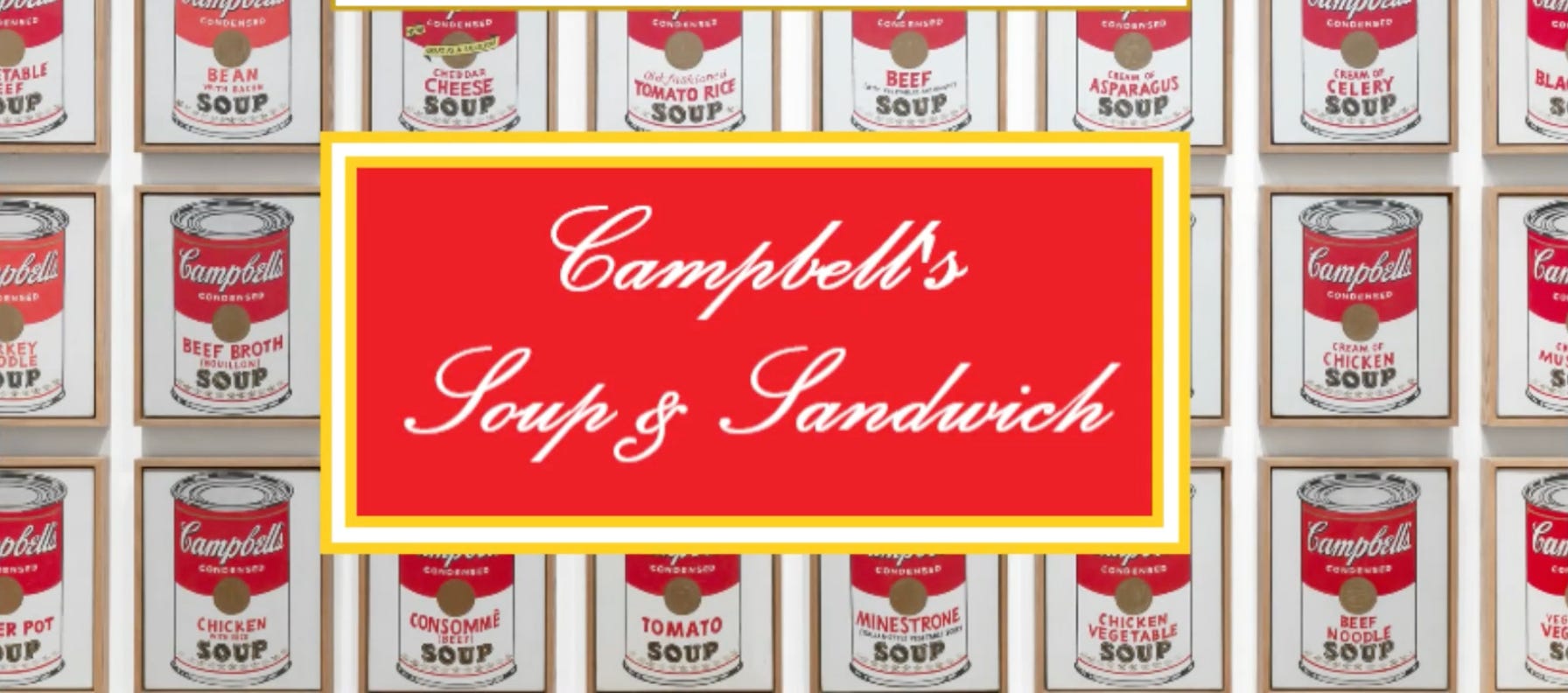
*photo above: once upon a time, my dad was an ad man, and the big chicago agency he worked for was, when he started there in 1963, needham, louis & brorby, whose client back in the day was good ol’ campbell’s, the soup people. the soup-can montage above is a frame from the beginning of one of needham’s commercials for campbell’s, which proved to be a masterstroke—in the jingle department.
needham pinned new lyrics to the tune of “love and marriage” (frank sinatra’s 1955 pop hit) and forever paired soup and sandwich, rather like the horse and carriage of frank’s hit. introducing america to the notion that soup could get pushed from the starter course to the center ring, needham went with these lines: “Soup and sandwich, soup and sandwich, / Have your favorite Campbell’s soup and sandwich! / Any time or weather, / Soup and sandwich go together...”
and then the big wind-up: (Ending line sung to the tune of “Like a horse and carriage”): “...They belong together, like Mr. and Mrs.!”
oh, holy day….i could sing that song in my sleep—though i sure haven’t done so in a long, long while….
have a listen:
while poking around, i found this gem in the obit of maurice needham, founder of the agency (now a mega-agency), who died in 1966. his wisdom on the art of advertising writing:
Mr. Needham advised his writers to use common words “as Abraham Lincoln did.” He urged a direct approach and opposed illustration “for the sake of attracting attention.” “Sell him or her your idea or product. Don’t talk to 50,000 or a million people. Just talk to one person, as you would if you were actually sitting with him. Make your message a man-to-man affair. Do a selling job on him or her.”
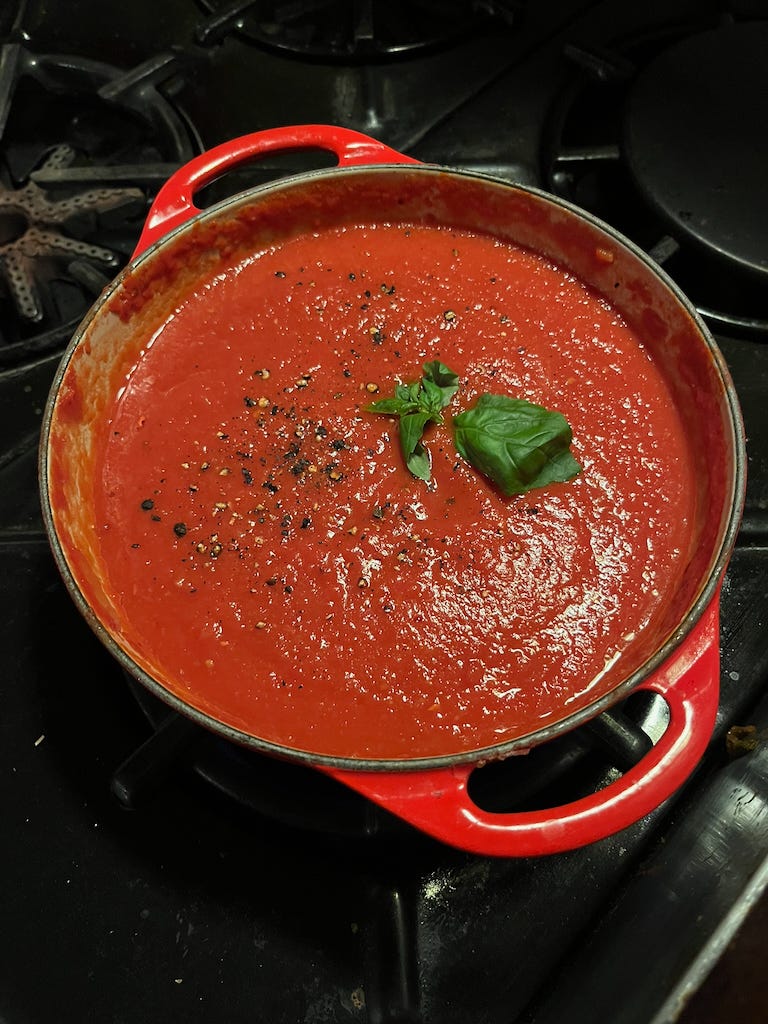
Love this so much! Today I’m making a Mediterranean-influenced lentil soup with onions, carrots, tomatoes and spinach
I can go find the original recipe tho I tend to modify…